
When to Repair and When to Replace a Tire: A Guide for Hanover Drivers
Your tires are the only contact your vehicle has with the road, making them one of the most critical safety components of your car. Knowing when a tire can be safely patched and when it needs to be replaced can save you money while keeping you and your passengers safe. At Alex’s Autoworks in Hanover, PA, we help drivers make informed decisions about tire repair and replacement every day. This guide will walk you through the key factors that determine whether your tire needs a simple repair or a full replacement.
The Repair vs. Replace Decision: What You Need to Know
Not all tire damage is created equal. Understanding the difference between repairable and non-repairable damage helps you make smart decisions about your tire investment.
| Factor | Repairable | Requires Replacement |
|---|---|---|
| Location of Damage | Tread area only | Sidewall, shoulder, or belt edge |
| Puncture Size | ¼ inch or smaller | Larger than ¼ inch |
| Tread Depth | Above 4/32 inch | Below 4/32 inch |
| Tire Age | Under 6 years old | 6+ years old |
| Previous Repairs | No repairs within 16 inches | Multiple repairs or overlapping damage |
| Driven While Flat | No | Yes (internal structure compromised) |
Understanding Repairable Tire Damage in Hanover
The Tread Zone Is Your Safe Zone
The reinforced tread area of your tire can handle repairs when the damage meets specific criteria. Think of your tire like a layered cake. The tread has steel belts and multiple rubber compounds designed to withstand punctures from nails, screws, and similar road debris.
What makes a puncture repairable:
- Straight-through penetration in the center tread area
- Clean entry point without ragged edges
- No accompanying sidewall bulges or cracks
- Tire maintained proper inflation after puncture
- Single puncture, not multiple holes in close proximity
The Patch-and-Plug Method
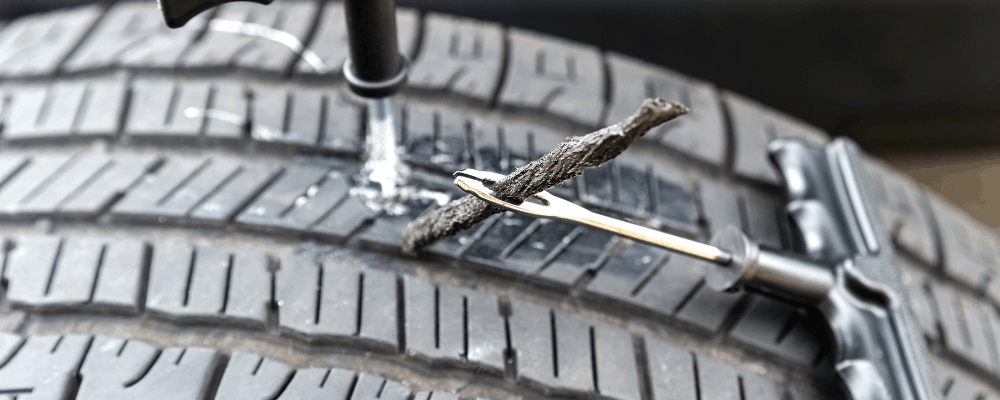
Professional tire repairs use a combination approach that seals the damage from both inside and outside. A plug fills the puncture channel while an internal patch reinforces the area and prevents moisture intrusion. This two-part system provides a permanent repair that can last the life of the tire when done correctly.
Quick tire sealants and external plugs might get you to a repair shop, but they’re temporary solutions. A proper repair requires removing the tire from the wheel to inspect internal damage and apply the patch from inside.
When Replacement Is Your Only Safe Option
Sidewall Damage Is Always Serious
The sidewall flexes thousands of times during every mile you drive. Unlike the rigid tread area, it has no steel belts and relies on thin rubber layers and fabric cords for strength. Any puncture, cut, or bulge in the sidewall compromises structural integrity and cannot be safely repaired.
If you’ve hit a curb, pothole, or noticed a bulge or cut on your tire’s side, replacement is the only safe choice. The constant flexing prevents patches from adhering properly and dramatically increases the risk of sudden blowout.
Tread Depth and Safety Thresholds
Pennsylvania law sets the minimum tread depth at 2/32 inch, but waiting until you reach the legal minimum puts you at risk.
Tread depth performance guide:
- 10/32 inch (new tire): Maximum traction and water evacuation
- 6/32 inch: Still excellent performance in all conditions
- 4/32 inch: Reduced wet traction; replacement recommended
- 2/32 inch: Legal minimum; poor wet weather performance
- Below 2/32 inch: Illegal and extremely dangerous
Quick tread check at home: Insert a quarter into your tread groove with Washington’s head upside down. If you can see the top of his head, you’re at or below 4/32 inch and should start shopping for replacements.
The Hidden Danger: Tire Age Matters More Than You Think
Here’s something most drivers don’t realize: your tires can look perfect and still be dangerous. Rubber deteriorates over time regardless of how much you drive.
Chemical breakdown: Rubber compounds contain oils and chemicals that keep them flexible. Over time, heat, sunlight, and ozone cause these compounds to evaporate and harden.
Visible signs of aging:
- Small cracks in the sidewall or between tread blocks
- Fading or discoloration of the rubber
- Hardening of the rubber surface
- Separation of rubber layers
Tire aging timeline:
- Years 1-3: Peak performance and safety
- Years 4-6: Gradual compound degradation begins
- Years 6-10: Replacement strongly recommended
- Over 10 years: Replace immediately regardless of appearance
Finding Your Tire's Birthday
Look for the DOT code on your tire’s sidewall. The last four digits tell you everything. “3218” means the tire was manufactured in the 32nd week of 2018. That makes it over seven years old and well overdue for replacement, even if it looks great.
The Real Cost of Delaying Tire Service
Putting off tire service seems like a money-saving move, but it often costs more in the long run.
Worn tires create cascading problems:
- Longer stopping distances: Tires with 4/32 inch tread take up to 70 feet longer to stop on wet pavement
- Poor fuel economy: Underinflated or worn tires increase rolling resistance, burning more fuel
- Suspension damage: Driving on damaged tires transmits harsh impacts to suspension components
- Alignment issues: Uneven tire wear often indicates alignment problems that will quickly destroy new tires if not corrected
A small investment in timely tire service prevents expensive repairs down the road and keeps your family safe on Hanover’s challenging roads.
Professional Tire Service in Hanover, PA
At Alex’s Autoworks, we’ve built our reputation on thoroughness and transparency. We catch the things that should be obvious to other people and take care of customers the way we’d want to be taken care of.
Our Comprehensive Tire Inspection Process
When you visit our facility at 3380 Centennial Rd, we perform a complete tire evaluation:
- Visual and physical assessment: Examining tread wear patterns, sidewall condition, and any visible damage
- Precision measurements: Using professional tread depth gauges at multiple points across each tire
- Age verification: Checking DOT codes to determine tire age and replacement timing
- Digital documentation: Taking photos through our DVI system so you see exactly what we see
- TPMS diagnostics: Using Ford IDS, GM Techline, Snap-On, and Autel scanners to check sensor function
Ready to have your tires inspected by experienced professionals? Schedule your tire service with us at Alex’s Autoworks, 3380 Centennial Rd, Hanover, PA 17331, or call (717) 698-1535 to speak with our team.
Advanced Equipment Makes the Difference
- Hunter Alignment Machine: Precision wheel alignment ensures your new tires wear evenly from day one while improving handling and fuel economy.
- TPMS service: We reprogram and calibrate tire pressure sensors, especially important for European vehicles with sensitive monitoring systems.
Smart Tire Maintenance for Hanover Drivers
Hanover’s roads throw everything at your tires. Hot summer asphalt, winter salt, spring potholes, and fall debris all take their toll.
Monthly tasks you can do:
- Check tire pressure when tires are cold
- Look for visible cuts, punctures, or bulges
- Inspect tread depth using the quarter test
- Remove stones or debris wedged in tread grooves
Professional tire service schedule
- Every 5,000-7,000 miles: Tire rotation for even wear
- Every 6 months: Professional inspection including tread depth and alignment check
- Annually: Complete alignment verification, especially after hitting potholes or curbs
Why Local Hanover Drivers Choose Alex's Autoworks
- Transparent communication: Digital vehicle inspections with photos sent directly to you
- Convenient service: Key drop box for early morning drop-offs
- Comprehensive warranty: 2-year/24,000-mile warranty
- European vehicle expertise: We specialize in Mercedes, BMW, Audi, Volkswagen, Jaguar, and Land Rover, but service all makes and models
- Community involvement: Proud supporters of Conemaugh Valley School District athletics
We understand that European vehicles have specific tire requirements and sensitive monitoring systems. Our experience with these vehicles means we get it right the first time.
FAQs About Tire Repair and Replacement
How often should you replace tires?
Most tires should be replaced every six years regardless of tread depth, or when tread depth reaches 4/32 inch. Driving habits, road conditions, and maintenance practices all affect tire lifespan, so regular inspections help determine the right replacement timing.
Can you repair a tire with a nail in the sidewall?
No, sidewall damage cannot be safely repaired and requires tire replacement. The sidewall lacks the structural reinforcement of the tread area and any puncture compromises the tire’s integrity, creating a serious safety hazard.
How do you know when tire tread is too low?
Use the quarter test by inserting a quarter into the tread groove with Washington’s head upside down. If you can see the top of his head, your tread is at or below 4/32 inch and needs replacement for safe driving.
Is it better to patch or plug a tire?
A proper repair uses both a patch and plug combination applied from the inside of the tire. This method seals the puncture internally with a patch and fills the hole with a plug, providing the most secure and long-lasting repair that meets industry safety standards.
Do I need to replace all four tires at once?
Replacing all four tires simultaneously provides the best performance and handling. On all-wheel-drive vehicles, tire diameter differences can damage the drivetrain, making full replacement important. For two-wheel-drive vehicles, replacing tires in pairs is acceptable if the remaining tires have adequate tread.
Schedule Your Tire Service in Hanover, PA Today
Don’t wait until a small tire issue becomes a safety hazard. Whether you need a quick repair or are considering new tires, our experienced team provides honest assessments and quality service you can trust.
Visit us at Alex’s Autoworks, 3380 Centennial Rd, Hanover, PA 17331, or call us at (717) 698-1535 to schedule your tire inspection or service appointment. We serve Hanover and surrounding Pennsylvania communities with the transparency and expertise you deserve.